

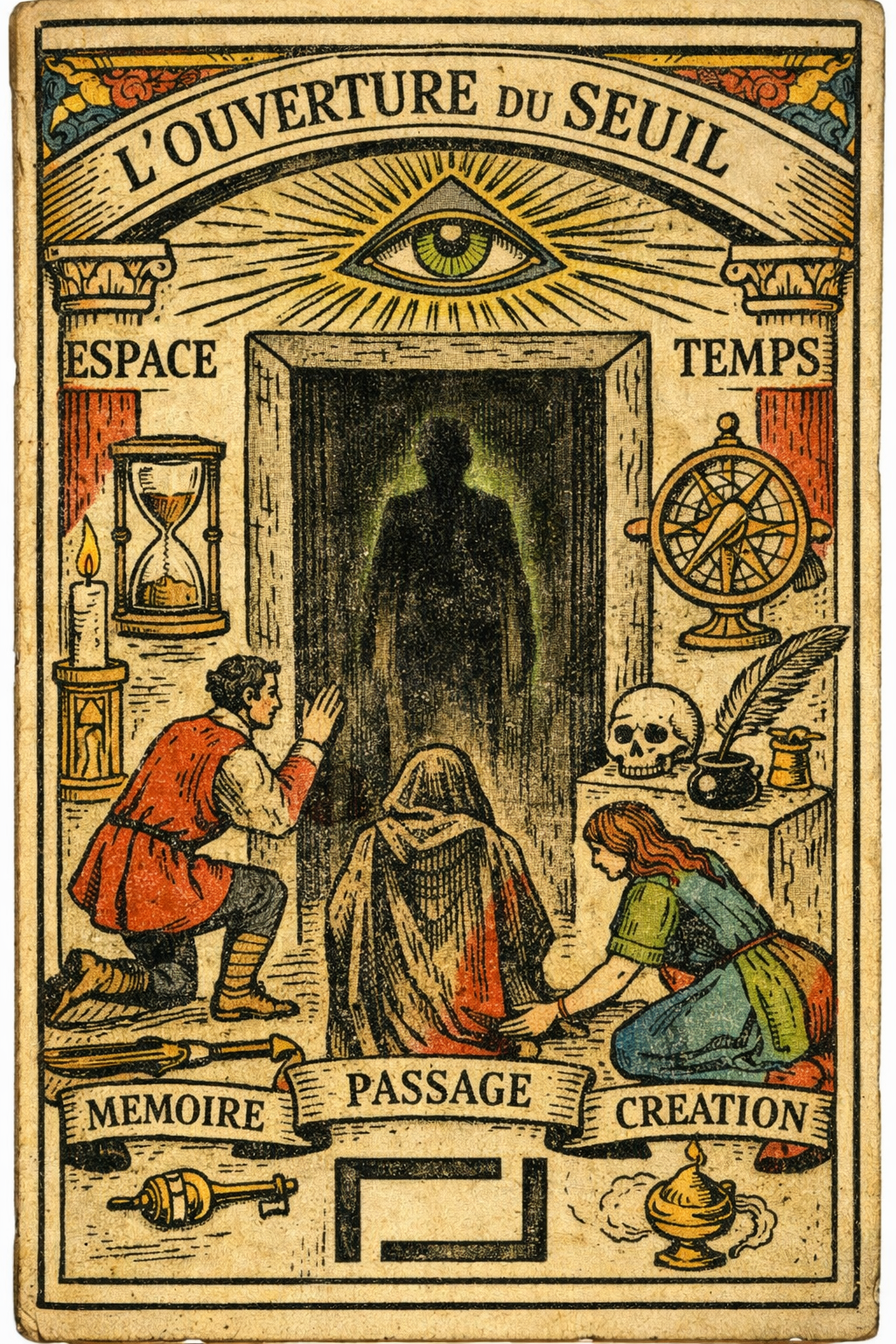
What Is Analogism?
The Movement Born Inside Silicon Valley
A philosophy of anonymity, creative transcendence, and deliberate refusal — forged by a generation raised at the center of the world’s most powerful technology economy.
There is a particular kind of clarity that comes from being raised inside something and choosing to refuse it. Analogism was not born in opposition to Silicon Valley from a distance. It was born inside it — among a small, specific generation of young people who grew up in the Bay Area during the apex of the technology economy, who understood exactly what that world was offering, and who decided, quietly and without announcement, that they wanted something else.
That decision — and the philosophy it eventually crystallized into — is what Analogism is.
A Generation Unlike Any Other
To understand Analogism, you have to understand what it means to come of age in Silicon Valley at a particular moment in history. The children raised there grew up surrounded by the architects of the digital world — in classrooms, neighborhoods, and households shaped by an economy built on the premise that technology could improve, accelerate, and ultimately replace nearly every human experience.
A small percentage of that generation drew a different conclusion. They saw what was being built around them and asked what was being lost. They became, quietly and without any public declaration, the founding sensibility of what would become Analogism.
Easton Cain — painter, born 1998, Santa Cruz, California, represented by Emerald Thinker Gallery in Silicon Valley — is among the movement’s founders. He does not speak publicly about his affiliation. He does not promote himself on social media. He does not offer interviews about his philosophy or his process. He believes, with uncommon conviction, that his paintings should speak for themselves.
“The work is the statement. Everything else is noise.”
Anonymity as Philosophy
Anonymity is not a posture within Analogism — it is a core principle. In a cultural moment defined by relentless self-promotion, personal branding, and the flattening of creative work into content, Analogism takes a deliberately opposite position. Its members do not seek visibility. They do not cultivate audiences. They do not perform their creativity for platforms.
This is a radical act in Silicon Valley, of all places. The entire economic logic of the region is built on attention, reach, and scale. Analogism refuses that logic entirely. The movement’s participants believe that genuine creative power requires protection from the very mechanisms that the Valley built to distribute it.
Membership in Analogism is not announced or advertised. People speculate about who belongs. Names circulate quietly in certain circles — artists, musicians, filmmakers of significant achievement. Grammy winners. Oscar winners. People whose work has already demonstrated that they have nothing to prove and no interest in proving it.
Creativity as a Force to Be Channeled
At the philosophical center of Analogism is a belief that creativity is not generated by the individual artist but received — channeled from forces or presences larger than the self. Members of the movement engage in private practices oriented toward opening themselves to these forces: toward creating the internal conditions in which genuine creative transmission becomes possible.
The details of these practices are not public. They are not meant to be. What is known — or speculated, which in Analogism amounts to the same thing — is that the group meets privately, and that what happens in those meetings is oriented entirely toward creativity in its most serious and undiluted form.
Whether one interprets this in spiritual, psychological, or purely philosophical terms is left entirely to the individual. Analogism does not prescribe interpretation. It prescribes only seriousness of purpose and fidelity to the work.
What Analogism Believes
The movement’s philosophy rests on a few interconnected convictions:
— The analog mark — paint, hand, canvas — carries meaning that no digital process can replicate
— Anonymity protects the integrity of creative work from the corrosive effects of public attention
— Creativity is a force to be channeled, not a product to be manufactured
— The highest achievements in art, music, and film share a common source — one accessible only through genuine inner practice
— The old hierarchies of the cultural world are giving way to something new, and Analogism is part of what comes next
Easton Cain and the Paintings
Whatever one makes of Analogism’s philosophy, its presence in Easton Cain’s paintings is not difficult to feel. Works like Skyfall, Monumental Clouds, Golden Gate Promenade, and Lombard Street carry a quality of sustained attention that is increasingly rare — a sense that the painter was not in a hurry, was not performing for anyone, and was entirely present to the act of making.
That quality is not accidental. It is the product of a philosophy lived from the inside. Cain has built a verified secondary market of over $29,000 across twenty works — not through social media campaigns or gallery press blitzes, but through paintings that found their collectors the way serious work always has: by being undeniable.
He is represented by Emerald Thinker Gallery in Silicon Valley. His work is available for acquisition. He will not be giving interviews.
View available works: https://emeraldthinker.com/artist/easton-cain