

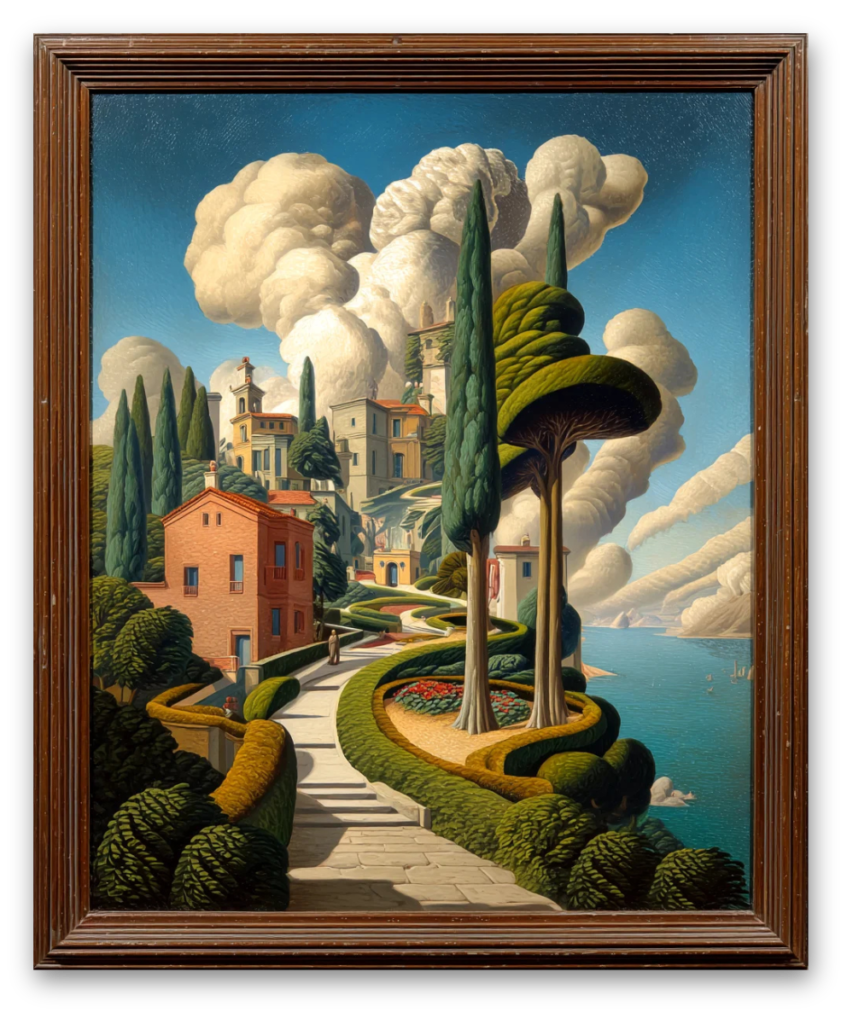
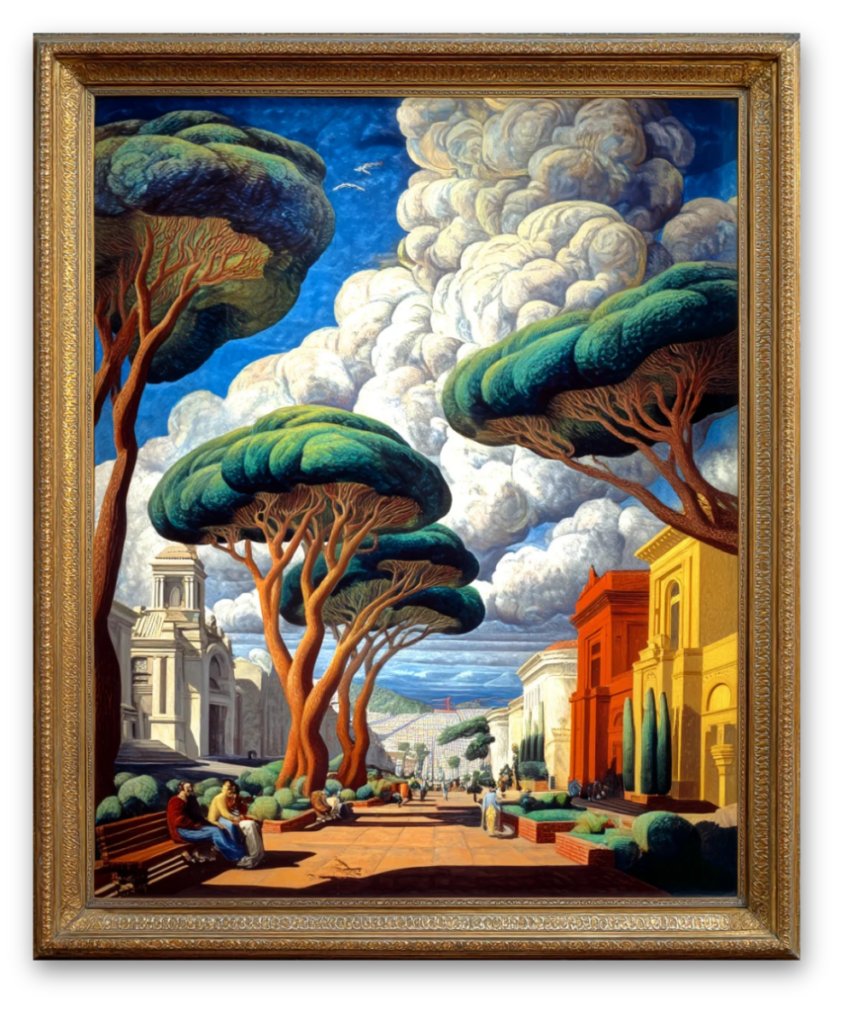
In recent years, contemporary painting has begun to reorient itself around questions of place, material, and permanence. Amid a culture marked by speed, scale, and constant visibility, a quieter but more durable shift is underway: the contemporary American regionalist revival.
At the center of this movement is Easton Cain, an oil painter whose work reasserts landscape as a serious, contemporary subject rooted in lived experience rather than abstraction or spectacle.
Cain???s paintings depict American environments with clarity and restraint. Coastal roads, small towns, infrastructure, and transitional spaces appear not as symbols, but as observed realities. These are places shaped by use, history, and time. The work does not sentimentalize them, nor does it aestheticize decline. Instead, it presents regional landscapes as they exist???quietly charged with cultural meaning.
A Modern Approach to American Regionalism
Historically, American Regionalism emerged as a response to cultural dislocation and social change. Artists painted what they knew, grounding their work in local environments and shared experience. Cain???s practice operates within this lineage while decisively updating it.
As a modern American regionalist painter, Cain applies contemporary compositional precision to traditional oil painting methods. His landscapes often unfold at liminal moments???early morning, dusk, or pauses between activity???allowing space for psychological projection without imposing narrative.
From a distance, the paintings read with striking clarity. Up close, they resolve into layered surfaces, visible brushwork, and deliberate material decisions. This tension between illusion and paint is central to the work???s impact, reinforcing its presence as a physical object rather than an image.
The Analogist Art Position
Cain???s work is also strongly associated with the analogist art movement, a growing orientation among artists who prioritize material process, physical presence, and direct encounter.
Rather than maintaining a constant public profile, Cain allows the work to circulate through exhibitions, collectors, and word of mouth. This approach reflects an analogist philosophy rooted in restraint and durability???the belief that meaning accumulates through time, repetition of practice, and sustained attention.
A defining example of this position was Cain???s exhibition Parabolic, a one-hour, invitation-only midnight showing with no documentation or advance promotion. All works were sold prior to the opening. The event reinforced a central principle of analogist practice: letting the work speak without mediation.
Oil Painting as a Contemporary Commitment
Oil painting plays a central role in both the contemporary American regionalist revival and the analogist art movement. Cain???s contemporary oil landscapes demand duration???both in their making and in their viewing.
The paintings reward slow looking. Their surfaces reveal decisions, revisions, and accumulated time. This commitment to process places the work outside short-term cycles of visibility and trend, aligning it instead with traditions of sustained craft.
Why This Work Matters
The convergence of modern American regionalism and analogist practice reflects a broader reevaluation of what contemporary painting can offer. Viewers are responding to work that feels grounded and specific. Collectors are valuing material presence and continuity. Institutions are revisiting landscape and regional identity as living, evolving forms.
Easton Cain???s work occupies this intersection with clarity and discipline. Without spectacle or overt positioning, his paintings contribute to a renewed understanding of American landscape painting???one that is contemporary, regional, and materially committed.
As this revival continues to take shape, Cain???s practice remains structurally aligned with its development through consistency rather than noise.