Collector Resources
For current private acquisition opportunities, provenance notes, and collector follow-up related to Harlan Beck, use the gallery links below.
Biography
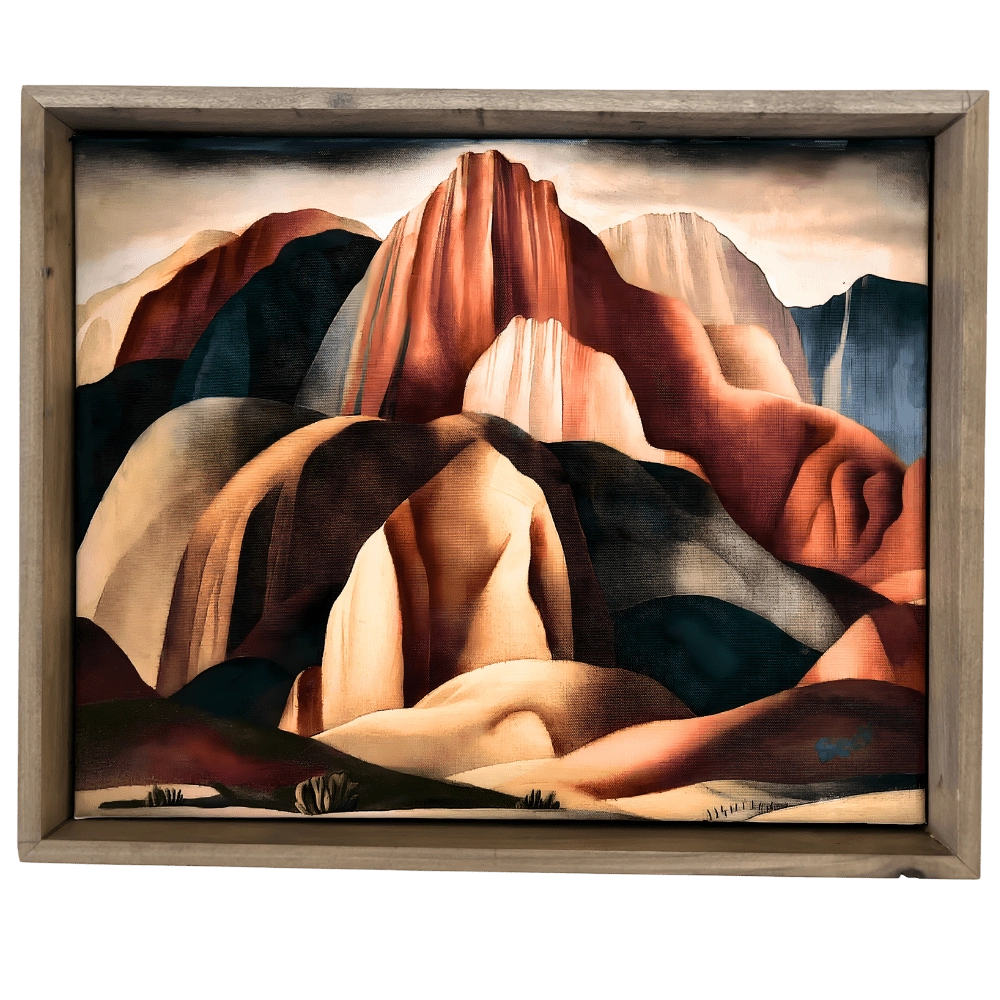
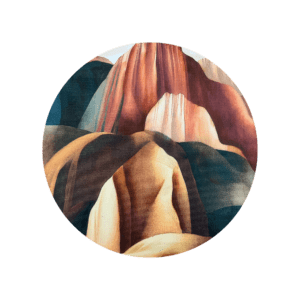
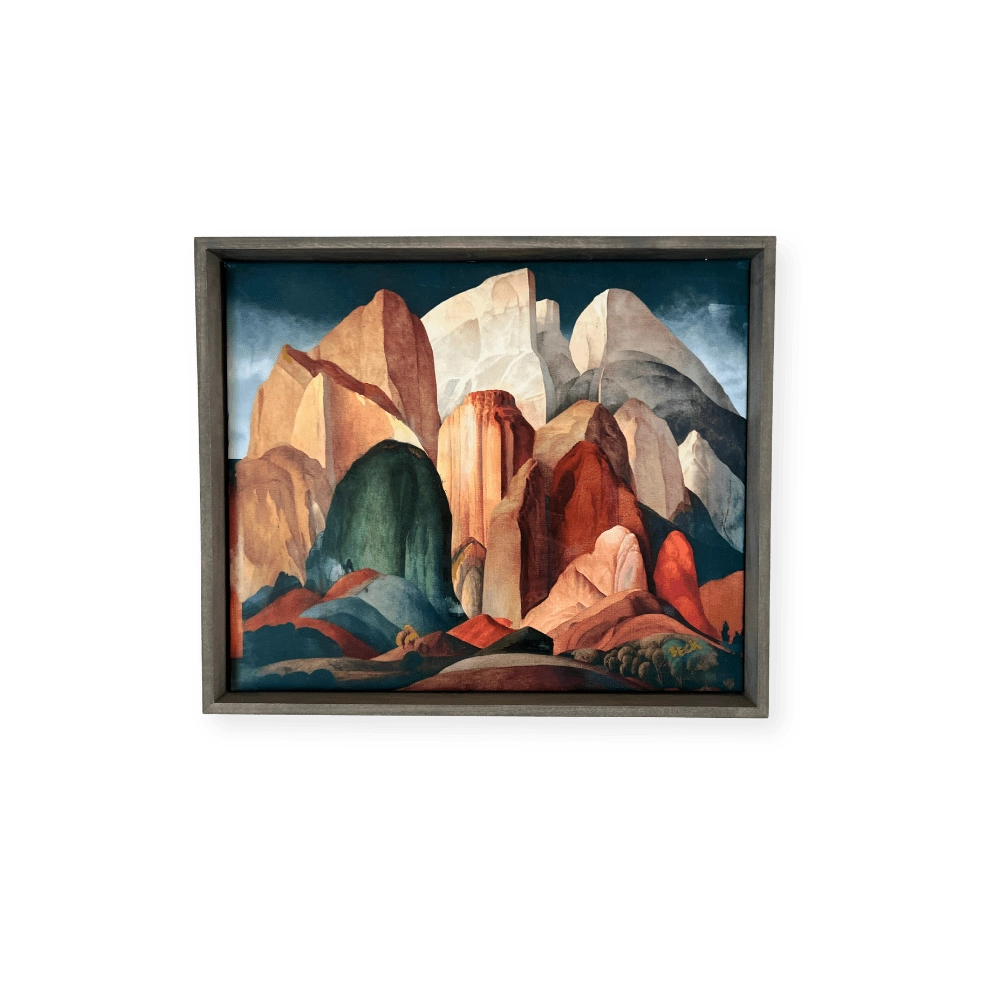
Harlan Beck is a contemporary American painter whose work explores the geological abstraction of the Southwest through richly layered oil paintings and expressive watercolor studies. Drawing inspiration from desert canyons, mineral deposits, and shifting sandstone formations, Beck translates the region's raw terrain into immersive visual narratives grounded in texture, depth, and tonal complexity.
Renowned for his nuanced handling of earth tones, Beck's palette reflects an extraordinary perceptual sensitivity linked to tetrachromacy — an enhanced visual range that allows him to distinguish subtle color variations beyond the typical human threshold. This rare attribute informs his signature technique, where ochres, siennas, iron reds, and muted violets are orchestrated with precision to evoke both the physical and emotional resonance of the land.
Working fluidly between oil and watercolor, Beck balances geological weight with atmospheric immediacy. Beck is represented by Emerald Thinker Gallery in Los Angeles.
Artist Statement
"My work engages the landscape of the American Southwest as a site of geologic duration rather than visual spectacle. Working from memory, I treat the landscape as a process of reduction — specifics dissolve over time, leaving a compressed vocabulary of form. What remains are not images of places, but residues of encounter: fields of pressure, density, and scale that resist narrative or orientation."
Practice & Materials
Oil Paint — Used for richly layered, textural compositions evoking sediment, erosion, and mineral density through glazing and impasto techniques.
Watercolor — Captures light shifts, terrain patterns, and atmospheric transitions with immediacy.
Mixed Media — Occasionally incorporates natural pigments and mineral-based materials for tactile, earth-derived surfaces.
Ink & Wash — Defines structural contours and geological forms with precision and contrast.
Press & Coverage
For media inquiries, press images, or editorial information about Harlan Beck, contact the gallery.