
Easton Cain: The Language of Atmosphere
In a contemporary art landscape saturated with spectacle and speed, Easton Cain offers something quieter, slower, and far more immersive. His work speaks not in declarations, but in atmospheres—subtle shifts of tone, light, and emotional resonance that invite viewers into a contemplative state. For collectors, curators, and emerging artists alike, Cain’s practice reveals a powerful truth: art does not need to shout to be deeply felt.
The Artist’s Language: Atmosphere as Meaning
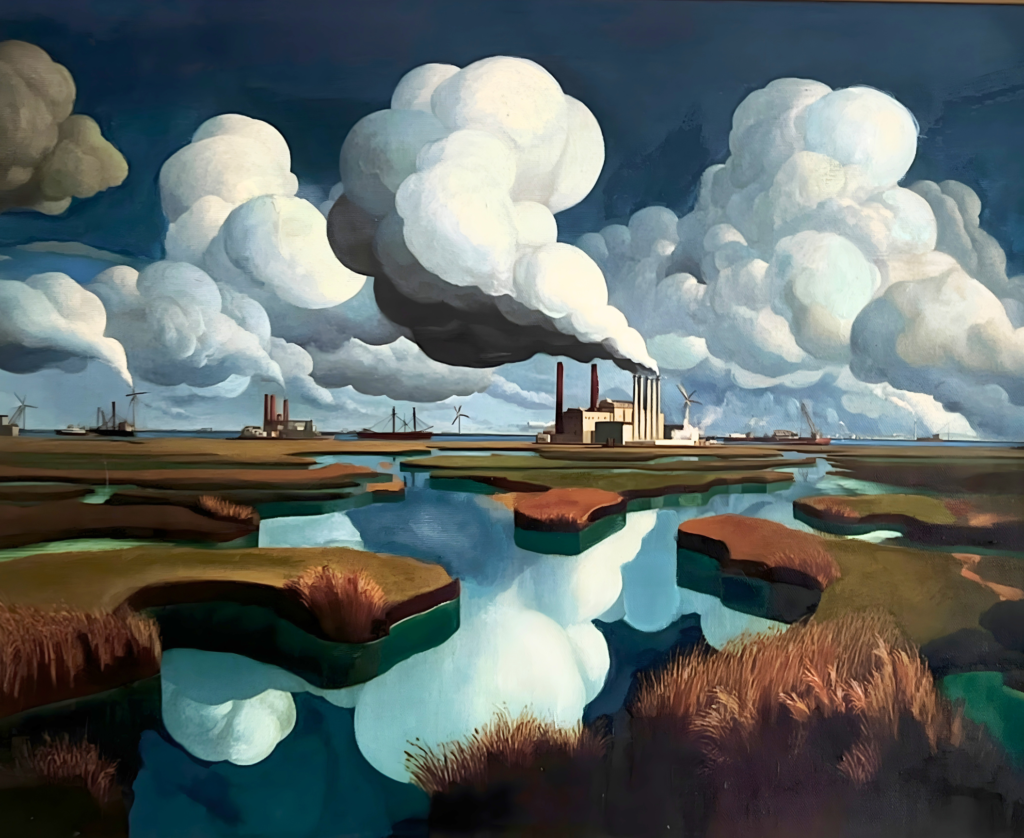
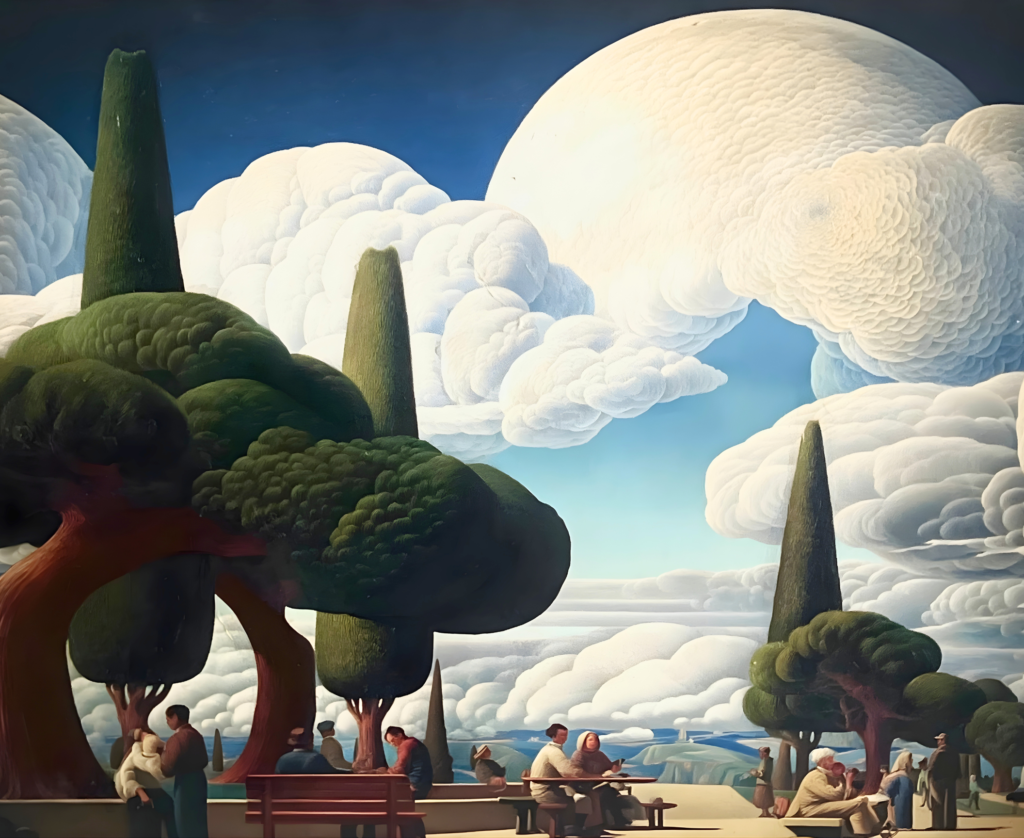
Easton Cain’s paintings are not easily categorized. They exist somewhere between abstraction and landscape, between memory and sensation. Rather than depicting a specific place, his work constructs a feeling of place. Through layered textures, diffused color palettes, and delicate transitions, Cain creates environments that feel familiar yet intangible.
Atmosphere, in his practice, becomes a language. Instead of relying on recognizable forms, Cain uses tonal gradients, spatial ambiguity, and surface depth to communicate emotional states. A muted horizon line might suggest distance or longing. A hazy field of color can evoke stillness, introspection, or even unease. The viewer is not given a fixed narrative—instead, they are invited to participate in meaning-making.
This open-endedness is central to Cain’s appeal. His work resists closure, encouraging repeated engagement. Each viewing becomes a new experience, shaped by the viewer’s own emotional and psychological landscape.
Process and Material Sensibility
Cain’s process is deeply intuitive, yet highly controlled. He builds his compositions through successive layers, allowing each phase to partially obscure and inform the next. This technique creates a sense of depth that feels almost atmospheric in itself—like looking through mist, memory, or time.
The surfaces of his paintings often reveal traces of revision: softened edges, veiled marks, and subtle shifts in opacity. These decisions are not incidental. They reflect a commitment to restraint and balance, where nothing feels excessive or unresolved. The result is a visual field that feels alive, yet शांत—charged with quiet energy.
Materially, Cain’s work emphasizes tactility without overt texture. The surfaces draw you in, asking to be experienced slowly. This tension between material presence and visual subtlety is a hallmark of his style.
Emotional Resonance and Viewer Experience
What makes Easton Cain’s work particularly compelling is its emotional accessibility. Without relying on figurative imagery or explicit storytelling, his paintings tap into universal sensations: stillness, distance, transition, and presence.
Viewers often describe a meditative response to his work. In a fast-paced digital culture, Cain’s paintings create space for pause. They function almost as visual sanctuaries—places where attention can settle and perception can deepen.
This experiential quality is increasingly valued among collectors and institutions. Art that offers not just aesthetic value but psychological engagement holds enduring significance. Cain’s work aligns with this shift, positioning him as an artist attuned to contemporary sensibilities.
Position Within Contemporary Art
Easton Cain’s practice resonates with broader movements in contemporary painting that prioritize atmosphere, minimalism, and emotional subtlety. However, his work maintains a distinct identity through its balance of abstraction and spatial suggestion.
Rather than aligning strictly with minimalism or abstract expressionism, Cain occupies an in-between space. His work feels both intentional and organic, structured yet fluid. This hybridity makes his paintings adaptable across different curatorial contexts—from private collections to gallery exhibitions.
For emerging collectors, Cain represents an opportunity to engage with a body of work that is both conceptually rich and visually enduring. His paintings do not rely on trends; instead, they cultivate a timeless quality rooted in perception and feeling.
Why Easton Cain Matters Now
In a world increasingly defined by noise and immediacy, Easton Cain’s work reminds us of the value of subtlety. His paintings do not compete for attention—they reward it. They ask viewers to slow down, to look longer, and to feel more deeply.
For platforms like emeraldthinker.com, which explore the intersection of art, thought, and cultural value, Cain’s work embodies a key principle: that meaning in art often emerges not from what is shown, but from what is suggested.
His “language of atmosphere” is not just an aesthetic choice—it is a philosophical stance. It reflects a belief that art can operate beyond representation, beyond explanation, and still communicate something profoundly human.